
There are few things more frustrating than pulling your favorite comforter out of the dryer only to find it ruined. Instead of a fluffy, cloud-like covering, you are left with a lumpy, misshapen mess where the filling has migrated to the corners. This destroys the insulation (tog rating) of your bedding and makes for a cold, uncomfortable night’s sleep.
The good news is that this common laundry disaster is entirely avoidable. Whether you are dealing with a down-filled heirloom or a modern synthetic fiber, the right technique can keep your bedding pristine. In this guide, we will cover exactly how to prevent duvet clumping in the wash, ensuring your duvet stays soft, evenly distributed, and fresh for years to come.
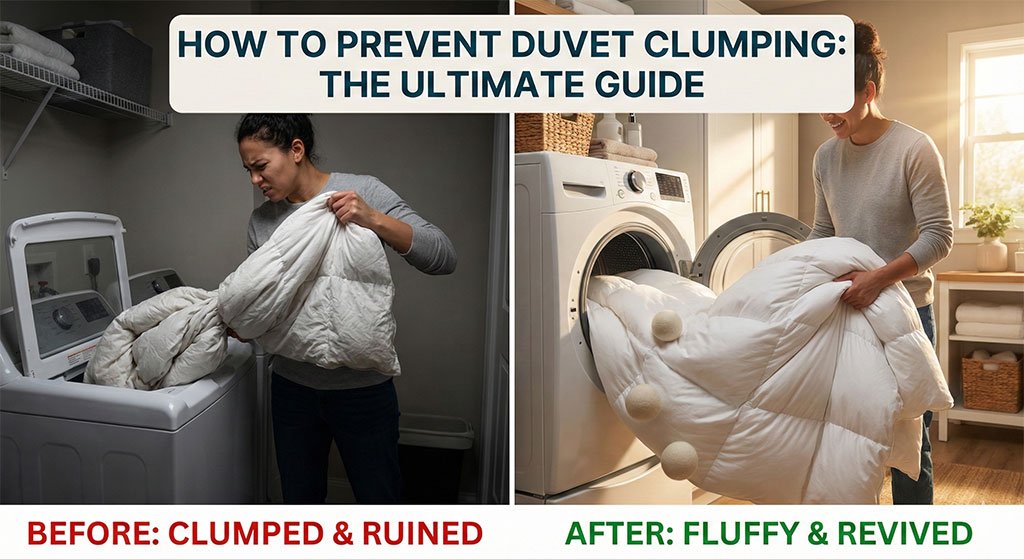
Why Do Duvets Clump? The Science of The Lump
Before we dive into the solution, it is important to understand the problem. Duvets clump because water weight forces the filling materials to stick together. When a duvet is wet, the filling becomes heavy and, if not agitated correctly, will ball up.
- Agitation Issues: If your washing machine drum is too small, the duvet cannot move freely. It gets twisted into a tight ball, forcing the filling into hard lumps.
- Material Differences: Washing synthetic vs. feather duvet requires different approaches. Feathers have natural oils that can be stripped away by harsh detergents, causing them to brittle and clump. Synthetic fibers, on the other hand, can melt or mat together if exposed to high heat.
Pre-Wash Preparation: The First Line of Defense
You cannot just throw a duvet in the machine and hope for the best. To succeed at washing duvet without clumping, you need to prep the item.
- Check the Care Label: This is non-negotiable. If the label says “Dry Clean Only,” do not attempt to wash it at home.
- Repair Tears: Sew up any small holes. If filling escapes during the wash, it will imbalance the load and create massive knots.
- Spot Clean Stains: Treat visible stains locally before washing. This allows you to run a gentler cycle, which is less likely to cause clumping than a heavy-duty cycle.
Step-by-Step: How to Prevent Duvet Clumping in the Wash
The actual washing process is where most mistakes happen. Follow these steps to ensure a smooth cycle.
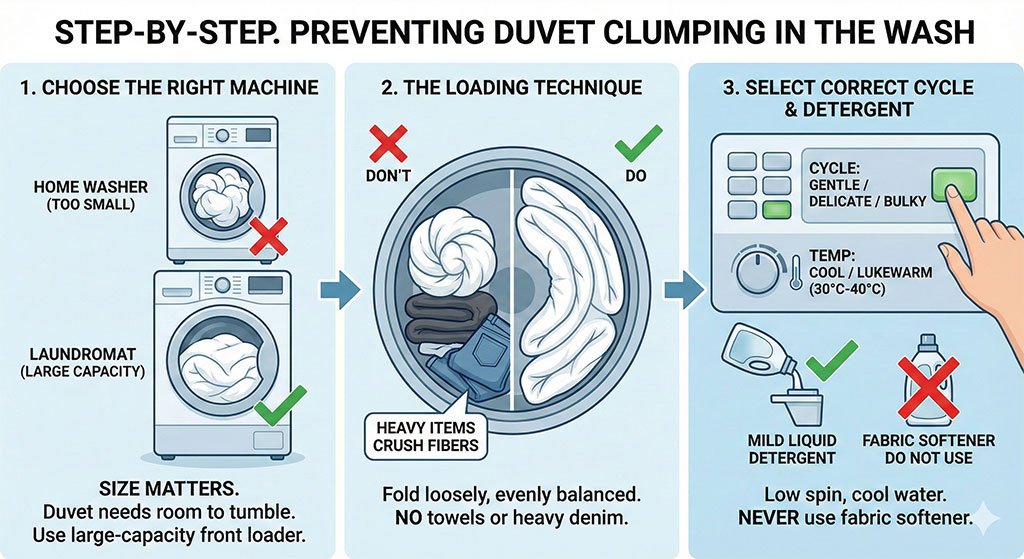
1. Choose the Right Machine
Size matters. A standard home washing machine often isn’t large enough for a King or Queen duvet. If you have to stuff the duvet in with force, it will clump. The duvet needs room to tumble. If your machine is too small, take it to a laundromat and use their large-capacity front loaders.
2. The Loading Technique
Never ball the duvet up. Fold it loosely in accordion style or place it around the drum evenly to balance the load. Do not wash towels or heavy denim with your duvet; these items are heavy when wet and will crush the delicate duvet fibers, causing them to mat.
3. Select the Correct Cycle and Detergent
- Cycle: Select “Gentle,” “Delicate,” or “Bulky/Bedding.” You want a low spin speed to reduce the centrifugal force that creates hard lumps.
- Temperature: Use cool or lukewarm water (30°C – 40°C).
- Detergent: Use a mild liquid detergent. Crucial Tip: Never use fabric softener. Softener coats the down or synthetic fibers in a waxy residue, making them sticky and virtually guaranteeing they will clump together.
The Drying Process: The Secret to Un-Clumping
The washing cycle gets the dirt out, but the drying cycle is what restores the fluff. If you want to know how to prevent duvet clumping in the wash, the secret is actually in how you dry it.
The Tennis Ball Trick
This is the most effective method for maintaining loft. Place 2–3 clean tennis balls or wool dryer balls inside the dryer drum with the duvet.
- How it works: As the dryer spins, the balls bounce around, pummeling the duvet gently. This impact breaks up wet pockets of down or synthetic fiber, preventing them from drying into hard balls. Using tennis balls in dryer for duvet maintenance is the industry standard for home care.
The Pause and Fluff Method
Do not set the dryer for 2 hours and walk away.
- Set the dryer to Low Heat (High heat ruins fibers).
- Every 30 minutes, pause the cycle.
- Take the duvet out and shake it vigorously from all sides.
- Break up any developing clumps with your hands.
- Return it to the dryer.
Troubleshooting: How to Fix Lumpy Comforter After Washing
Did you already wash your duvet and it came out lumpy? Don’t panic; it is usually salvageable.
If the duvet is still wet, repeat the drying process above with more tennis balls and more frequent “Pause and Fluff” breaks. If the duvet has already dried into lumps, you will need to re-wet it. Run it through a rinse-only cycle (no detergent) to ensure no soap residue is gluing the fibers together, then follow the strict drying instructions above. This is the most reliable way to fix lumpy comforter after washing.
FAQ
It is possible but risky. Top loaders with a central agitator can twist the duvet, tearing the baffles (internal walls) and causing severe clumping. If you must use a top loader, place the duvet carefully around the agitator to balance the load.
Down requires special care. Use a specific down-safe detergent that preserves the natural oils of the feathers. Drying takes significantly longer for down than synthetic—sometimes up to 3 or 4 hours on low heat. Ensure it is 100% dry to prevent mold.
It likely isn’t fully dry yet. The outside fabric may feel dry, but the inner clusters of filling retain moisture. Continue drying on low heat with tennis balls until the lumps disappear completely.
Conclusion
Taking care of your bedding doesn’t have to be a gamble. By using the right machine capacity, avoiding harsh chemicals like fabric softeners, and utilizing dryer balls, you can maintain the loft and warmth of your comforter for years.
The key to success is patience during the drying process. Whether you are dealing with expensive goose down or a practical synthetic blend, knowing how to prevent duvet clumping in the wash ensures that your bed remains a cozy, inviting sanctuary every night.