Remember the washing machine you grew up with? You’d open the lid, and right in the middle was a tall, finned plastic post. You had to carefully wrap your jeans and towels around it to make sure everything fit. That center post is an agitator, and for decades, it was the only way to get laundry clean at home.
Fast forward to today, and you might find yourself staring into the drum of a brand-new top-loading machine that is completely empty. No post. Just a massive, shiny stainless steel tub.
If you’re shopping for a new laundry machine, you’ve probably noticed this shift. But taking away that familiar center post leaves a lot of buyers wondering if these newer machines actually work. Figuring out the washer without agitator pros and cons is the best way to decide if this modern style fits your laundry routine, or if you should stick to the old-school design. Let’s break it down so you can buy your next appliance with confidence.
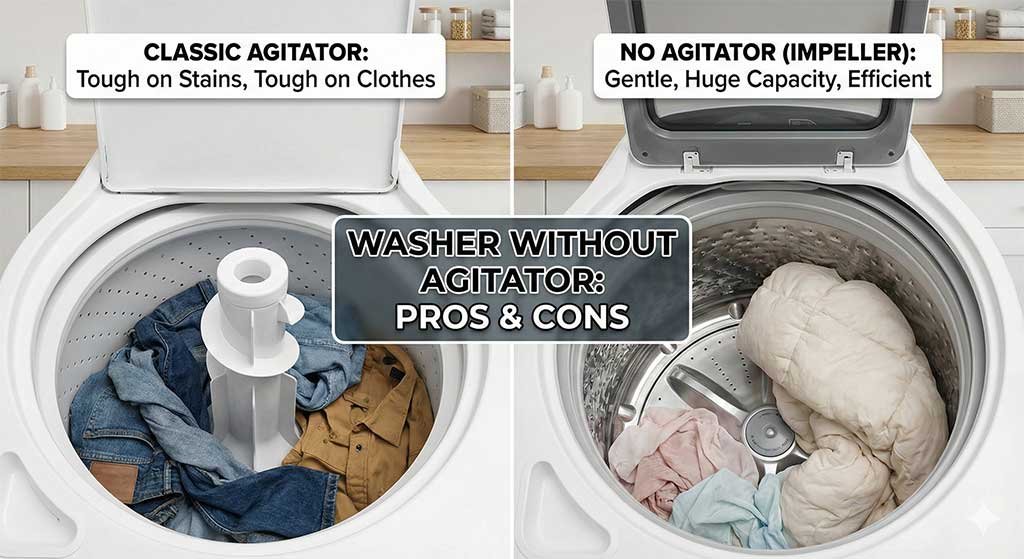
Table of Contents
What Exactly is a Washer Without an Agitator?
When you buy a top-load washer without an agitator, you are buying what the appliance industry calls an “impeller” washing machine.
Instead of a tall column that aggressively twists and pulls your clothes through a deep tub of water, an impeller washer uses a low-profile cone, disc, or ribbed plate located at the very bottom of the wash drum.
Here is how it works: the machine fills with a much shallower pool of water. As the motor runs, that bottom disc spins, causing the clothes to rub against each other. In an agitator machine, the clothes are cleaned by rubbing against the plastic post. In an impeller machine, the clothes clean each other through the gentle tumbling action created by the bottom disc.
Visually, the difference is night and day. An agitator takes up a significant amount of space right in the middle of the drum. An impeller washer looks like a massive, cavernous bucket just waiting to be filled. But how does that translate to actual laundry day?
The Top Pros of a Washer Without an Agitator
There is a reason appliance manufacturers are pushing heavily toward the impeller design. Getting rid of the center post brings some massive benefits to your daily household chores.
1. Far Gentler on Your Clothes
We’ve all pulled a favorite t-shirt out of the wash only to find the collar stretched out, or a delicate sweater that mysteriously snagged. Agitators are tough on stains, but they are incredibly harsh on fabrics. The aggressive twisting motion physically beats the dirt out of your clothes.
Without that center post, your clothes aren’t being yanked around. The gentle rolling action of an impeller machine greatly reduces friction on the fabric fibers. If your wardrobe consists of lots of modern synthetics, delicates, athleisure wear, or expensive fabrics, an impeller is going to extend the lifespan of your clothing significantly.
2. Massive Capacity for Bulky Items
Have you ever tried to wash a king-sized comforter in a traditional agitator machine? It usually involves aggressively shoving the blanket down, hoping the lid closes, and then listening to the machine violently bang around because the load is unbalanced.
Removing the agitator frees up an enormous amount of cubic footage inside the drum. You can easily drop in heavy winter blankets, sleeping bags, dog beds, and massive loads of towels. If you have a large family and want to cut down the number of loads you run each week, the sheer capacity of an impeller washer is a massive upgrade.
3. Superior Water and Energy Efficiency
Older washing machines fill the entire tub to the brim with water. That takes a lot of water, and if you are running a warm or hot cycle, it takes a massive amount of electricity or gas to heat that water up.
Washers without agitators are almost always High-Efficiency (HE) machines. They use sensors to weigh the load and only add the exact amount of water needed to get the clothes damp so they can rub against each other. By using a fraction of the water, you automatically use a fraction of the energy required to heat it. Over the lifespan of the machine, this can translate to noticeable savings on your utility bills.
4. Easier to Load and Unload
It sounds like a minor detail until you are doing laundry every single day. Loading a traditional machine requires you to evenly distribute clothes around the center post. When the cycle is done, clothes are often wrapped tightly around the agitator, forcing you to peel them off. With an impeller, you just drop the clothes in (following the manufacturer’s loading instructions) and scoop them all out easily when they are done. No wrestling with wet jeans required.
The Top Cons of a Washer Without an Agitator
While the massive drum and gentle washing sound great, the impeller design is not perfect. There are some frustrating drawbacks that catch first-time buyers off guard.
1. Tough Stains Can Be Stubborn
Because an impeller washer is gentler on clothes, it simply doesn’t have the same aggressive scrubbing power as an agitator. If you work in construction, landscaping, as a mechanic, or if you just have kids who love rolling in the mud, you might find that an impeller struggles to get heavily soiled clothes completely clean. Ground-in dirt and heavy grease often require the physical beating that only an agitator can provide. You might find yourself having to pre-treat stains a lot more often.
2. Longer Wash Cycles
Efficiency comes at the cost of time. Because impeller machines use less water and rely on a gentler tumbling motion rather than aggressive thrashing, they need more time to get the job done. A standard wash cycle on an older agitator machine might take 35 to 45 minutes. A standard cycle on a high-efficiency impeller machine can easily take 60 to 80 minutes. If you are someone who likes to speed through five loads of laundry on a Saturday morning, this slower pace can be incredibly frustrating.
3. The Tangling Factor
This is one of the most common complaints about impeller washers. Because the clothes are tumbling over each other in a low pool of water, long items like sweatpants, long-sleeved shirts, and sheets can easily braid themselves together. Sometimes you will open the lid to find your entire load of laundry twisted into one giant, heavy knot. This not only traps dirt inside the folds but makes moving the clothes to the dryer a massive headache.
4. Sensitivity to Loading Habits
Traditional agitator machines are pretty forgiving; you just throw the clothes in and turn it on. Impeller machines require you to pay attention. You absolutely have to load the clothes around the outer edge of the drum, leaving the center disc completely visible—like a donut. If you just dump a laundry basket directly over the middle of the impeller, the machine won’t be able to circulate the clothes properly. The items on top will stay dry, the items on the bottom won’t wash right, and the machine will likely throw an unbalanced load error.
Agitator vs. Impeller: Which is Right for You?
So, how do you choose? It honestly depends entirely on your lifestyle and what exactly goes into your laundry basket each week.
You should stick with a traditional agitator if:
- You regularly wash heavily soiled workwear or deeply stained kids’ clothes.
- You prefer faster wash cycles and just want to get laundry done quickly.
- You don’t want to overthink how you load the machine.
You should switch to an impeller (no agitator) if:
- You have a large family and need to run massive loads of laundry.
- You regularly wash bulky items like sleeping bags and king-size duvets.
- The majority of your clothes are lightly soiled office wear, gym clothes, and delicates.
- You want to cut down on water and energy usage.
Expert Tips for Using a Washer Without an Agitator
If you decide to make the leap to an impeller washer, you need to change your laundry habits slightly to get the best results.
- Load Like a Donut: As mentioned earlier, never cover the center disc. Drop your clothes loosely around the perimeter of the tub.
- Don’t Overstuff: Even though the tub looks huge, don’t pack the clothes down tightly. The garments need room to tumble and rub against each other. If they are packed tight, they won’t move, and they won’t get clean.
- Only Use HE Detergent: High-efficiency machines require High-Efficiency (HE) detergent. Standard detergents create way too many suds, which cushions the clothes (preventing them from rubbing together) and can completely confuse the machine’s water level sensors.
- Sort by Fabric Weight: Don’t wash heavy denim jeans in the same load as lightweight t-shirts. Because the clothes clean each other, mixing heavy and light fabrics often leads to the heavy fabrics dominating the spin, resulting in off-balance loads and excessive tangling.
FAQs
Yes, but they clean differently. They are excellent for everyday dirt, sweat, and odors on regular clothing. However, for deeply ground-in mud or heavy industrial grease, they might fall short compared to a traditional agitator’s harsh scrubbing action.
No, it’s actually the exact opposite! Because there is no central plastic post violently twisting your garments, washers without agitators are incredibly gentle, helping your fabrics last much longer.
Absolutely. This is one of the biggest selling points of an impeller washer. The lack of a center post opens up the drum, giving you plenty of space to wash thick comforters without unbalancing the machine.
Conclusion
Upgrading your laundry room is a big investment, and realizing that modern machines operate completely differently than the ones we grew up with can be a bit surprising. Ultimately, weighing the washer without agitator pros and cons comes down to what you wash most often.
If your laundry basket is full of bulky blankets, delicates, and massive piles of moderately dirty everyday wear, ditching the agitator is a fantastic move that will save you water and protect your wardrobe. But if you’re battling heavy-duty dirt and stains on the daily, you might want to stick with the tried-and-true center post.