
Modern washers come with a wide array of settings, and it is easy to simply default to the “Normal” wash for every load. However, if you have ever looked at the dial and wondered, “What is the Bedding Cycle on a washing machine?”, you are missing out on a feature designed specifically to protect and deeply clean your larger linens.
This specialized setting is engineered to handle large, absorbent items like sheets and lightweight blankets by adjusting water levels, drum movement, and spin speeds. Using it correctly ensures a thorough clean while preventing your machine from becoming off-balance or your fabrics from getting damaged.
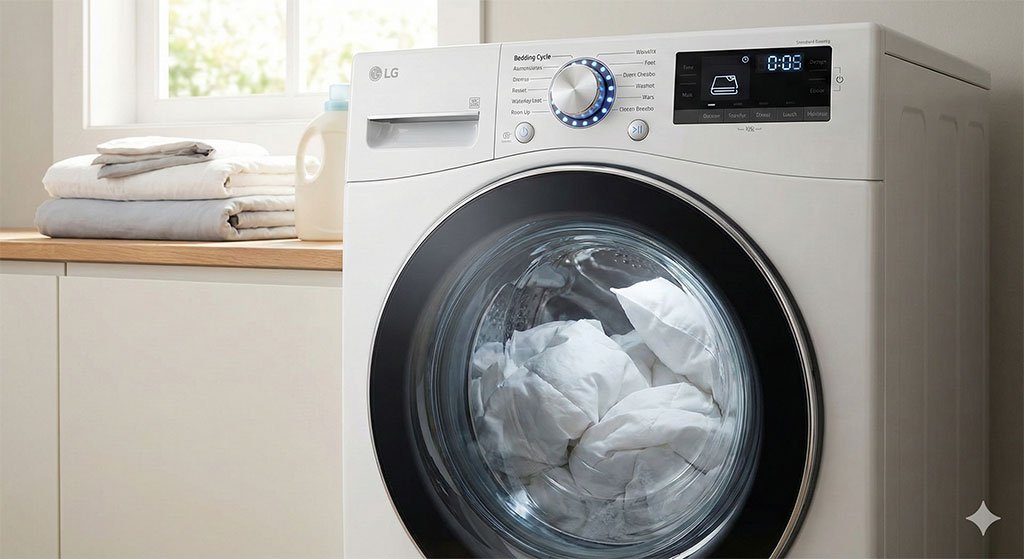
Table of Contents
Breaking Down What is the Bedding Cycle on a Washing Machine
When you select the bedding setting, your washing machine alters its standard operational behavior to accommodate heavy, bulky fabrics. Here is exactly how it functions:
- Increased Water Levels: Unlike normal cycles that use just enough water to dampen clothes, the bedding cycle fills the drum with extra water. This ensures that large items like sheets are fully submerged and saturated, allowing the detergent to penetrate the fibers effectively.
- Specialized Agitation: Large pieces of fabric have a tendency to twist, tangle, and form giant knots during a wash. To combat this, the bedding cycle uses a unique “stop-and-go” motion or modified tumbling pattern. This gentle yet effective agitation keeps items loose and prevents them from balling up.
- Optimized Spin Speeds: Heavy, wet linens retain a massive amount of water. The cycle typically uses a medium to high spin speed to extract as much moisture as possible, reducing your drying time, but it ramps up gradually to maintain drum balance.
What Should Go in a Bedding Load?
Not every large item belongs in this cycle. Knowing what to include helps maintain your washer’s efficiency and longevity.
Ideal Items:
- Fitted and flat bed sheets
- Pillowcases and lightweight shams
- Duvet covers
- Lightweight throw blankets
- Mattress protectors
Items to Avoid:
- Heavy Comforters or Sleeping Bags: These often require a “Bulky” or “Large” cycle, which handles extreme weight better.
- Delicate Silks or Satins: Even if they are sheets, delicate materials should be washed on the “Delicate” cycle to prevent friction damage.
- Everyday Clothing: Mixing regular clothes with large sheets often results in the smaller items getting trapped inside the sheets, preventing them from getting clean.
Bedding Cycle vs. Normal Cycle
Understanding the differences can help you make the right choice for laundry day.
Feature | Bedding Cycle | Normal Cycle |
Water Usage | High (Deep fill) | Low to Medium (Sensor-based) |
Agitation Style | Intermittent/Anti-tangle | Continuous/Standard |
Spin Speed | Medium-High (Gradual ramp) | High (Fast ramp) |
Load Type | Large, absorbent linens | Mixed everyday garments |
Pro-Tips for Washing Your Linens
To get the absolute best results when washing your bedding, keep these practical tips in mind:
- Do Not Overload: Your sheets need room to move. Use the “palm test” by placing your hand into the drum; you should have about a hand’s width of free space at the top.
- Use Liquid Detergent: Powdered detergents can sometimes struggle to dissolve completely in large loads, leaving white streaks on your dark sheets. Liquid detergent disperses much more evenly.
- Loosen Items First: Never stuff your sheets into the washer in a tight ball. Loosely drop them into the drum individually to promote better water circulation.
Conclusion
Maintaining your sheets and blankets doesn’t have to be a guessing game. Now that you fully understand what is the Bedding Cycle on a washing machine, you can stop relying on the standard wash for everything. By taking advantage of the higher water levels and specialized agitation, you will enjoy fresher, cleaner linens while putting less strain on your appliance’s motor.