It is a great irony that the machine washing your family’s clothes is often hiding dirt, grime, and mildew. If you want fresh laundry, learning exactly how to clean a large capacity top load washer is a crucial household skill. This simple process will also significantly extend the lifespan of your appliance.
Large drums handle massive loads, meaning more surface area for soap scum and hard water minerals to build up. This trapped moisture creates a breeding ground for bacteria that makes clothes smell sour.
In this guide, we will walk you through a simple, chemical-free process to deep clean your machine. We will ensure it runs at peak efficiency for years to come without relying on harsh chemicals.
Table of Contents
Why Deep Cleaning Your Large Capacity Top Loader is Essential?
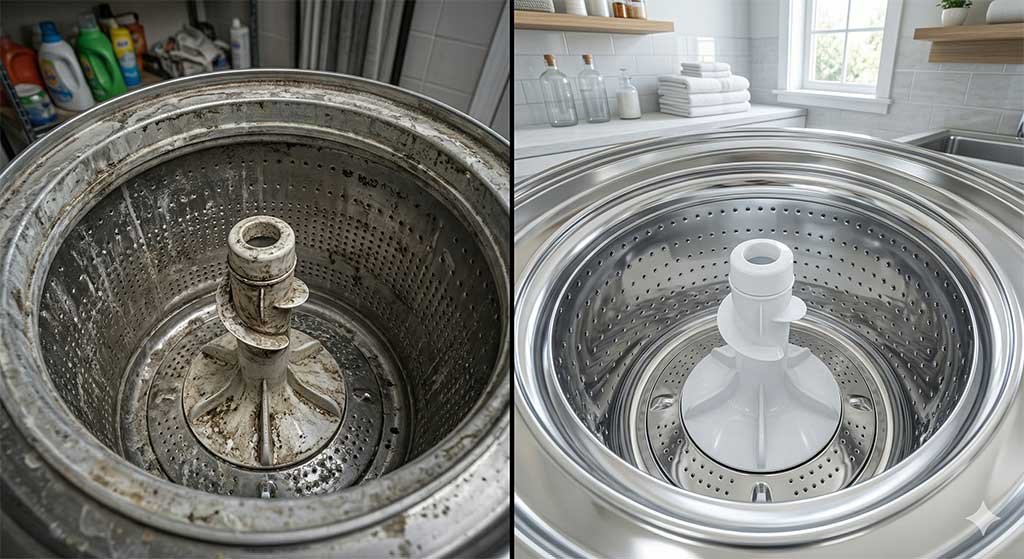
You might wonder how a machine constantly filled with soapy water gets dirty. It comes down to a stubborn, waxy buildup known in the appliance industry as “scrud.”
Scrud forms when fabric softener mixes with excess laundry detergent, dead skin cells, and trapped dirt. Because modern high-efficiency (HE) washers use less water, this soapy sludge doesn’t fully rinse away.
Instead, it coats the inner and outer tubs, trapping bacteria and mold spores. Hard water minerals also calcify along the drum walls, forcing the motor to work much harder than it should.
Supplies You Will Need
You do not need expensive, harsh chemicals to get the job done. Standard household items are highly effective at neutralizing odors and breaking down mineral buildup.
Gather this environmentally friendly cleaning toolkit:
- Distilled White Vinegar: (4 cups) Cuts through hard water stains and naturally kills bacteria.
- Baking Soda: (1 cup) A mild abrasive that scrubs away residue and neutralizes odors.
- Microfiber Cloth: Wipes down surfaces safely without scratching the finish.
- Old Toothbrush: Reaches deep into tight crevices and hinges.
- Bucket or Bowl: Perfect for soaking removable detergent dispensers.
Step-by-Step: How to Clean a Large Capacity Top Load Washer
If you have never deep cleaned your machine, set aside about two hours. Most of this time is entirely hands-off while the machine soaks.
Step 1: The Deep Vinegar Soak (Sanitizing the Drum)
First, ensure your washing machine is completely empty. Set your control panel to the hottest water, the longest wash cycle, and the largest load size.
As the drum fills with hot water, pour four cups of distilled white vinegar directly inside. Let the machine agitate for one minute so the vinegar mixes thoroughly.
Pause the cycle and let the mixture sit undisturbed for exactly one hour. This hot soak softens calcified minerals and breaks down hidden scrud between the tubs.
Step 2: Scrubbing the Agitator or Impeller
While the drum is soaking, grab your clean microfiber cloth. Dip it directly into the hot vinegar water inside the machine.
Wipe down the entire upper rim where dust, lint, and splashed detergent settle.
Next, use your old toothbrush dipped in vinegar water to scrub the agitator’s base. These tight crevices are notorious for trapping hair, strings, and mold.
Step 3: Cleaning the Dispensers
Pull-out trays for detergent and softener are common areas for black mold to grow. If removable, take them out and submerge them in a bucket of warm vinegar water.
Let the trays soak for 15 minutes, then scrub the gunk away with your toothbrush.
If your bleach dispenser is built into the rim, you cannot remove it. Instead, pour hot vinegar inside and aggressively scrub the funnel with your toothbrush.
Step 4: The Baking Soda Cycle (Neutralizing Odors)
After the hour-long soak, unpause the machine and let the cycle complete. The washer will drain the dirty vinegar water away entirely.
Keep the settings on the hottest water and longest cycle, then start it again. As it fills, pour one full cup of baking soda into the water.
Let this full cycle run without pausing it. The baking soda acts as a gentle abrasive and completely deodorizes the massive drum.
Step 5: Wiping Down the Exterior and Lid
While the baking soda cycle runs, clean the outside of your machine. Spray a 50/50 mix of water and vinegar lightly onto your microfiber cloth.
Carefully wipe down the control panel, buttons, and the front exterior of the washer. Never spray liquid directly onto the electronics.
Clean the glass lid inside and out until it is streak-free. Finally, use the toothbrush to clear trapped dust out of the lid hinges.
Routine Maintenance: Keeping Your Washer Fresh
Keep your newly cleaned machine fresh to stretch the time between deep cleans. These simple habits make a massive difference.
- Leave the Lid Open: Always allow the drum to air dry for a few hours after a wash.
- Use Less Detergent: Large HE drums only need about two tablespoons of high-quality soap.
- Skip Liquid Softener: Switch to wool dryer balls to prevent sticky scrud buildup entirely.
- Wipe Weekly: Quickly wipe the inside drum walls and rubber seals once a week.
Is Your Washing Machine Beyond a Good Scrub?
Sometimes, no amount of baking soda and vinegar can save an aging, broken appliance.
If your machine leaves grease marks, makes grinding noises, or won’t drain, the internal mechanisms are failing. Calling repair technicians constantly will quickly drain your wallet.
When repairs cost too much, it is time to upgrade your laundry room. Check out these 7 Best Large Capacity Top Load Washer Reviews to find a reliable replacement that fits your exact needs.
FAQ
Yes, you can use liquid chlorine bleach, but never mix it with vinegar. While bleach kills mold, vinegar is actually better at dissolving the hard water minerals that cause mold to grow.
For heavy-use households doing five or more loads a week, deep clean your machine once a month. If you wash less often and leave the lid open to dry, you can wait three to six months.
Mildew thrives in dark, damp environments that provide a steady food source. Leftover detergent and organic matter from your clothes provide the perfect home for smelly mold spores.
Conclusion
A heavy-duty washing machine is a major investment, but maintaining it shouldn’t feel like a chore.
By understanding how to clean a large capacity top load washer using simple household ingredients, you protect your appliance. Your clothes will come out genuinely fresh and clean every single time.
Make this deep-cleaning routine a regular part of your household schedule. You can finally say goodbye to musty towels and mysterious washing stains forever.