If you are dealing with the frustrating cycle of strawberry legs, red irritation, and painful shaving bumps, you are not alone. Many people switch from multi-blade manual razors hoping for a miracle cure, but the primary question remains: does an electric razor cause ingrown hairs on legs? The short, direct answer is that while any hair removal method carries a slight risk, using an electric razor properly significantly reduces your chances of developing ingrown hairs compared to traditional wet shaving.
In this comprehensive guide, we will break down the science behind why manual razors often fail sensitive skin, how electric shavers work to protect your hair follicles, and the exact routine you need to follow to achieve flawlessly smooth legs.
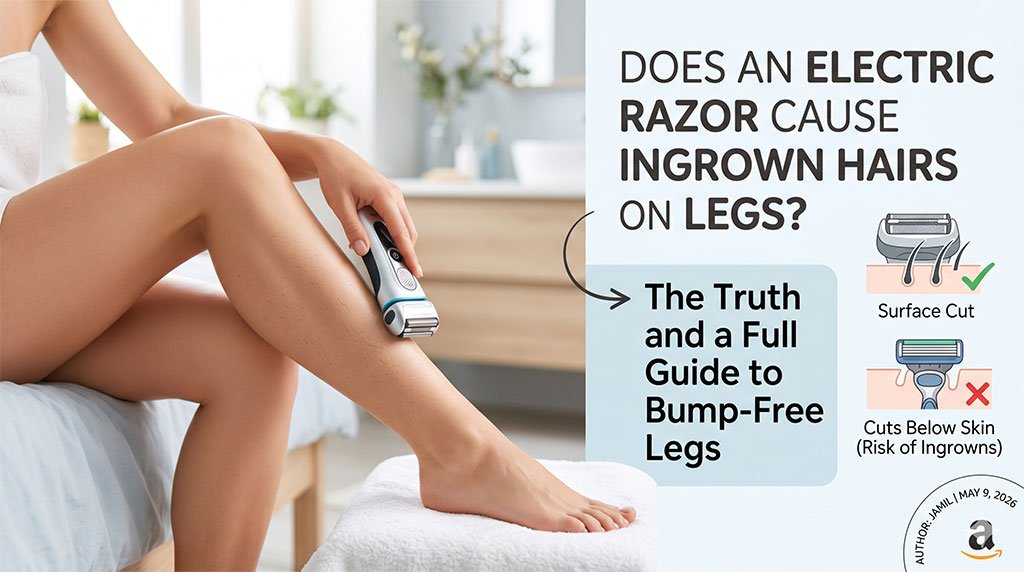
Table of Contents
The Root Cause of Ingrown Hairs (And Why Manual Razors Fail)
An ingrown hair occurs when a hair that has been cut off curls back and re-enters the skin, rather than growing straight out of the follicle. This trapped hair causes localized inflammation, leading to those painful, itchy red bumps.
Multi-blade manual razors are notorious for causing this through a process called “hysteresis.” The first blade pulls the hair up and away from the skin, and the subsequent blades cut it. When the hair is released, it snaps back down below the surface of the skin. As it begins to grow again, it easily becomes trapped beneath dead skin cells.
Does an Electric Razor Cause Ingrown Hairs on Legs?
Yes, it is possible, but it is incredibly rare when the device is used correctly.
Unlike manual razors, electric shavers work using a shearing action—much like a tiny pair of scissors. A protective metal guard (the foil or the rotary comb) sits against your skin, while the moving blades cut the hair from behind the guard.
This design means the blade never actually touches your skin, and the hair is cut precisely at the surface level, not below it. Because the hair is not cut beneath the skin line, the risk of it curling back inward is drastically minimized.
5 Reasons You Might Still Get Shaving Bumps With an Electric Shaver
If you have made the switch to electric and are still seeing irritation or ingrown hairs, the tool usually isn’t the problem—the technique is. Here are the five most common mistakes:
1. Skipping the Exfoliation Step
Electric shavers cut the hair flush with the skin. If your skin is covered in a layer of dead cells, the hair will still struggle to break through the surface. Gentle, regular exfoliation is non-negotiable.
2. Pressing Too Hard
Manual razor users often develop the bad habit of pressing the blade firmly into their skin for a closer shave. If you press an electric shaver too hard, you push the protective foil down, allowing the blades to snag the skin and cut the hair too aggressively, leading to irritation. Let the weight of the shaver do the work.
3. Using Dull or Damaged Blades
The blades on an electric shaver need to be replaced every 12 to 18 months. Dull blades will pull and tear the hair rather than cutting it cleanly. A jagged, torn hair is much more likely to bend back into the skin and become ingrown.
4. Wet Shaving with a Dry-Only Tool
If your shaver is not designed for wet/dry use, attempting to use it on damp, sticky skin will cause intense friction, razor burn, and ultimately, damaged hair follicles.
5. Shaving Against the Grain Too Soon
While shaving against the grain gives a closer finish, it creates a sharp angle on the tip of the hair. Always do your first pass with the grain of hair growth to reduce length safely before attempting an against-the-grain pass.
Foil vs. Rotary Shavers: Which is Better for Your Legs?
When shopping for an electric shaver, you will encounter two main types: foil and rotary. Choosing the right one is crucial for preventing shaving bumps.
- Foil Shavers: These feature straight, oscillating blades under a thin, perforated metal foil. They are generally considered best for sensitive skin and straight, fine leg hair. Because they shave in straight lines and have a very tight guard, they are excellent at preventing ingrown hairs on flat surfaces like shins and calves. Choosing the right one is crucial for preventing shaving bumps. If you are still weighing your options between different motorized hair removal methods, check out our deep dive into epilator vs. electric shaver for legs to see which provides the longest-lasting smoothness.
- Rotary Shavers: These feature three or more circular heads with spinning blades. They are highly flexible and navigate contours (like knees and ankles) beautifully. They are often better suited for coarse hair that grows in multiple directions.
How to Prevent Ingrown Hairs on Legs
To maximize your results and keep your legs smooth and bump-free, follow this expert routine:
- Prep and Exfoliate (24 Hours Prior): Use a chemical exfoliant (like a 2% salicylic acid body wash) or a gentle physical scrub the day before you shave. This clears the path for the hair to grow outward.
- Dry Completely: If using a dry shaver, ensure your legs are bone-dry. You can even apply a pre-shave powder to absorb excess moisture and allow the shaver to glide effortlessly.
- The 90-Degree Angle: Hold the electric shaver at a strict 90-degree angle to your leg. Use your free hand to gently pull the skin taut.
- Short, Gliding Strokes: Shave against the direction of hair growth using smooth, even strokes. Do not go over the same patch of skin more than twice to avoid friction burn.
- Post-Shave Care: Immediately apply a soothing, alcohol-free moisturizer containing aloe vera or witch hazel. Avoid tight leggings or skinny jeans for a few hours after shaving to let the skin breathe.
Conclusion
So, does an electric razor cause ingrown hairs on legs? While no hair removal method is entirely without risk, utilizing an electric shaver properly is one of the most effective ways to significantly minimize your chances of developing them.
By understanding the mechanics of how these devices shear hair at the surface level rather than cutting below the skin, and by strictly following a routine that prioritizes exfoliation, light pressure, and sharp blades, you can successfully say goodbye to strawberry legs and painful shaving bumps. Ultimately, investing in the right tool and mastering your technique will restore your skin’s smooth, healthy appearance.