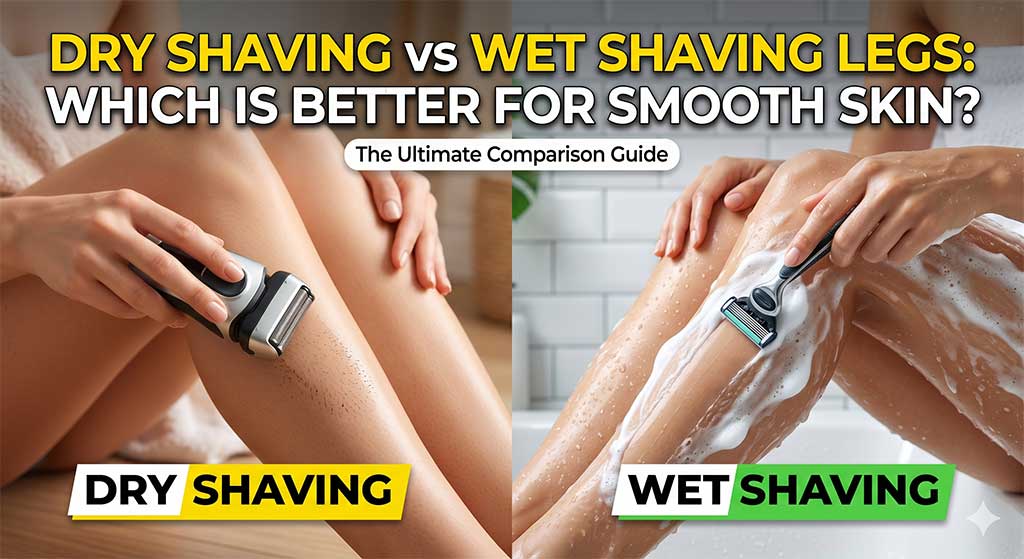
Are you constantly battling razor burn, itchy patches, and missed spots every time you groom? You are not alone. Choosing between dry shaving vs wet shaving legs can completely change your skin health and daily routine.
We all want flawlessly smooth skin without the hassle. However, using the wrong method can leave you with painful ingrown hairs. Let’s break down exactly which shaving method works best for your specific lifestyle and skin type.
What is Dry Shaving?
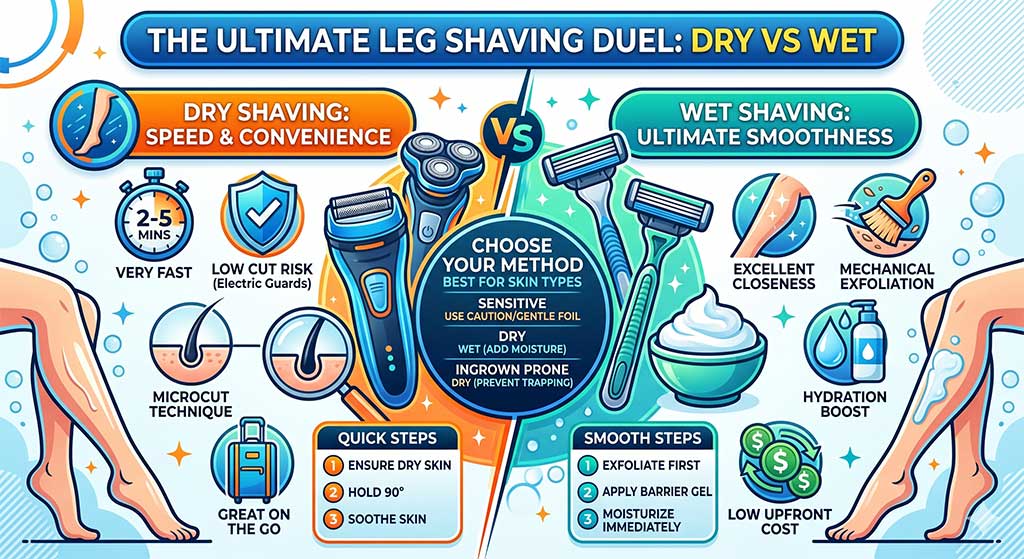
Dry shaving is exactly what it sounds like. It is the process of removing body hair without using any water, shaving cream, or soap. You simply take your device and glide it directly over your dry skin.
For this method, you cannot use a traditional manual razor. Scraping a bare blade across dry skin will instantly cause severe razor burn and micro-cuts. Instead, you must use a specialized electric shaver.
These electric devices come in two main varieties: foil shavers and rotary shavers. Foil shavers have straight heads that capture hair beneath a thin, perforated metal screen. Rotary shavers use circular blades that spin to cut hair growing in multiple directions.
The beauty of the electric shaver is how it cuts the hair. Rather than slicing the hair below the skin’s surface, it acts like tiny scissors, cutting the hair just above the skin line. This prevents the blades from aggressively scraping the epidermis.
Because of this mechanism, dry shaving is incredibly fast. You do not need to step into a shower or prepare a lather. You can easily touch up your legs in the bedroom, in the car, or right before heading out the door.
However, because the hair is cut slightly above the root, your legs might not feel as silky as they would with a wet shave. You will likely feel stubble sooner.
What is Wet Shaving?
Wet shaving is the traditional, time-honored method of hair removal. This process requires water, a lubricating barrier like shaving cream or gel, and a sharp manual razor.
The warm water plays a crucial role here. It softens the hair follicles and opens up the pores. This makes the hair much easier to slice through, reducing the tugging and pulling that often leads to irritation.
When you apply a high-quality gel or soap, you create a protective cushion on the skin. The manual razor then glides smoothly over this barrier, cutting the hair flush with the skin—or even slightly below the surface.
This extremely close cut is why wet shaving remains the gold standard for achieving truly smooth skin. The results last significantly longer than dry shaving. You might enjoy stubble-free legs for a few days before needing a touch-up.
Additionally, the physical action of dragging a blade across wet skin acts as a form of mechanical exfoliation. It strips away dead skin cells, leaving your legs looking radiant and fresh.
Of course, this method requires time and preparation. You must be in a shower or bath, and rushing through the process significantly increases your risk of painful nicks, cuts, and ingrown hairs.
Dry Shaving vs Wet Shaving Legs: Key Differences
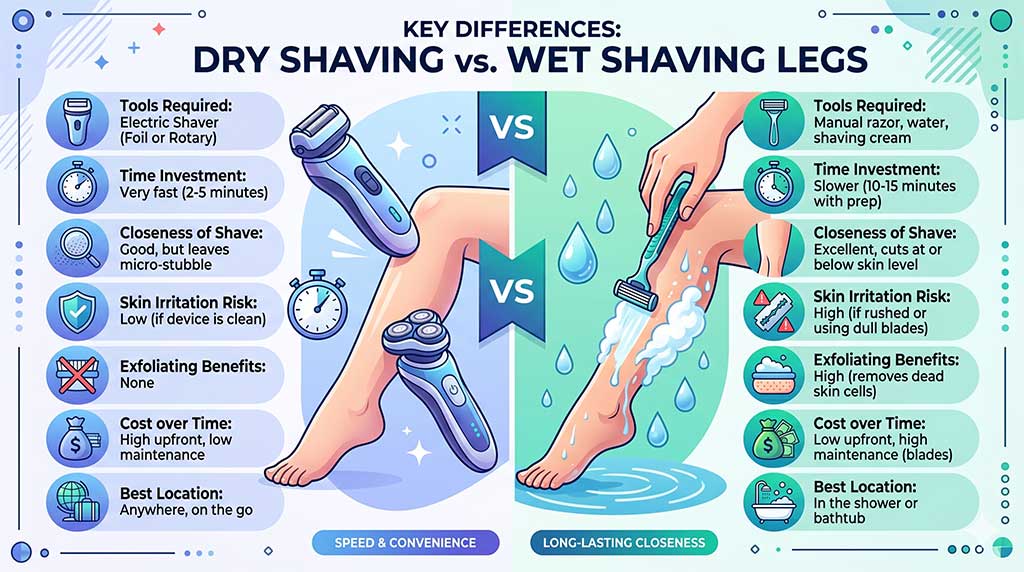
Understanding the core differences between these two methods will help you make the right choice for your grooming routine. Both methods have distinct advantages depending on your schedule and skin health.
When comparing the two, we have to look at time, cost, safety, and results. Let’s break down the major factors in a clear, easy-to-read comparison.
Feature | Dry Shaving | Wet Shaving |
Tools Required | Electric shaver (Foil or Rotary) | Manual razor, water, shaving cream |
Time Investment | Very fast (2-5 minutes) | Slower (10-15 minutes with prep) |
Closeness of Shave | Good, but leaves micro-stubble | Excellent, cuts at or below skin level |
Skin Irritation Risk | Low (if device is clean) | High (if rushed or using dull blades) |
Exfoliating Benefits | None | High (removes dead skin cells) |
Cost over Time | High upfront, low maintenance | Low upfront, high maintenance (blades) |
Best Location | Anywhere, on the go | In the shower or bathtub |
As you can see, your choice heavily depends on what you value more: speed and convenience, or long-lasting closeness. If you are constantly running late, an electric tool might save your mornings.
If you enjoy a luxurious self-care routine and demand the softest possible finish, the traditional wet method is undeniably superior.
The Pros and Cons of Dry Shaving Your Legs
Let’s dive deeper into the specific advantages and disadvantages of using an electric shaver on dry legs. Knowing these pros and cons will help you avoid common grooming mistakes.
Advantages of Dry Shaving
The biggest advantage is absolute convenience. You do not need a water source, making it the perfect solution for travelers or busy professionals. You can literally shave your legs while sitting on the couch.
Speed is another massive benefit. Without the need to wet the skin, lather up, and carefully rinse the blade after every stroke, you can finish both legs in a fraction of the time.
It is also inherently safer when it comes to deep cuts. The blades on an electric shaver are guarded by foil or guards. It is almost impossible to accidentally slice your ankle or knee.
Disadvantages of Dry Shaving
The most noticeable drawback is the lack of a super-close shave. Because the blades do not touch the skin directly, you will not achieve that glass-like smooth skin feel. You may feel a slight shadow of hair.
Dry shaving also requires a significant upfront investment. A high-quality electric device can cost anywhere from $50 to $200. While cheaper models exist, they often pull the hair instead of cutting it cleanly.
Finally, without the lubricating barrier of a cream or gel, the friction from the device’s head can still cause mild redness or warmth, especially if you press too hard against the skin.
The Pros and Cons of Wet Shaving Your Legs
Now, let’s explore the traditional wet shave. This is the method most people learn first, but it comes with its own unique set of rules and potential pitfalls.
Advantages of Wet Shaving
Nothing beats the closeness of a wet shave. A fresh manual razor cuts the hair perfectly level with the epidermis. This leaves your legs feeling incredibly soft and deeply exfoliated.
The process is also highly hydrating. By soaking your legs in warm water and using moisturizing shaving cream, you are actively conditioning the skin. This prevents the flaky, ashy look that can sometimes follow dry hair removal.
It is also much cheaper to get started. You can buy a high-quality manual handle and a pack of fresh cartridges for under $20 at any local drugstore.
Disadvantages of Wet Shaving
The primary disadvantage is the risk of razor burn and cuts. If you use a dull blade, skip the lather, or apply too much pressure, you will damage the top layer of your skin.
It is also a highly time-consuming process. You must be in a shower or bath, and you need to take your time maneuvering around tricky areas like the knees, shins, and ankles.
Lastly, this method increases the risk of ingrown hairs. Because the hair is cut so closely, it can sometimes curl back underneath the skin as it grows, causing painful, red bumps.
Which Method is Best for Your Skin Type?
Your specific skin type should be the deciding factor when choosing your hair removal method. What works perfectly for your best friend might cause a severe breakout on your legs.
If you have highly sensitive skin, wet shaving is usually the safer bet, provided you do it correctly. The thick cushion of a high-quality gel protects the delicate epidermis from blade friction.
However, if you suffer from severe eczema or active skin conditions, dragging a bare blade across your legs might aggravate it. In these rare cases, a gentle foil electric shaver lightly hovering over the skin might be better.
For those with naturally dry skin, the wet method is highly recommended. The warm water and rich creams infuse moisture back into your legs. Dry shaving can sometimes kick up dead skin cells, making flakiness worse.
If you are prone to ingrown hairs, you might actually want to switch to dry shaving. Because electric devices don’t cut the hair beneath the skin line, the blunt hair ends are less likely to become trapped as they grow out.
Ultimately, listen to your body. If you notice persistent redness, bumps, or itching after your routine, it is time to switch methods or upgrade your tools.
Step-by-Step Guide for the Perfect Shave
Whether you choose the speed of electricity or the closeness of a manual blade, technique is everything. Follow these exact steps to guarantee a flawless finish every single time.
How to Wet Shave Your Legs Properly
- Exfoliate First: Spend three to five minutes in warm water. Use a gentle body scrub or a loofah to slough away dead skin cells. This brings trapped hairs to the surface and prevents clogs.
- Apply a Barrier: Never use regular bar soap. Apply a generous layer of rich shaving cream, gel, or specialized shaving oil. This creates necessary slip for the blades.
- Shave With the Grain First: Using a sharp manual razor, start by shaving downward, in the direction of hair growth. Use short, light strokes. Never press hard.
- Shave Against the Grain (Optional): For an ultra-close finish, re-apply your cream and carefully shave upward against the grain. Be incredibly gentle around the ankles and knees.
- Rinse and Moisturize: Rinse your legs with cool water to close the pores. Pat them dry with a clean towel and immediately apply a thick, soothing body lotion or body butter.
How to Safely Dry Shave
- Prep the Skin: Ensure your legs are completely dry. Do not apply any lotions, oils, or water beforehand. Moisture will cause the electric blades to drag and pull the hair painfully.
- Trim if Necessary: If your leg hair is very long, use a trimmer attachment first to reduce the bulk. Electric shavers struggle with long, dense hair.
- Angle the Shaver: Hold your electric shaver at a strict 90-degree angle to your leg. Keep the skin pulled tight with your free hand to create a smooth, flat surface.
- Use Steady Motions: Glide the shaver against the direction of hair growth using steady, even strokes. If using a rotary shaver, use small circular motions. Do not press down hard.
- Clean and Soothe: Once finished, brush the hair clippings off your legs. Apply a lightweight, alcohol-free aftershave lotion to calm any potential friction warmth. Always clean the shaver head immediately.
FAQ
Absolutely not. Using a manual razor on dry skin is the fastest way to cause severe razor burn, cuts, and permanent scarring. A blade requires water and lubrication to glide safely. Only use an electric device for dry hair removal.
No. This is a very common myth. Neither shaving method changes the thickness, color, or growth rate of your hair. Shaving simply cuts the hair at a blunt angle, making the stubble feel coarser as it initially grows back.
For wet shaving, you should replace your cartridge every five to seven uses. A dull blade forces you to press harder, leading to irritation. For electric shavers, you should replace the foil heads every twelve to eighteen months depending on usage.
Red bumps are usually caused by friction or trapped hairs. To prevent them, always focus on exfoliating before you shave, use a sharp blade, never skip your protective gel, and moisturize immediately after you step out of the shower.
Conclusion
In the ultimate battle of dry shaving vs wet shaving legs, there is no single absolute winner. The best method depends entirely on your daily routine, your budget, and how your specific skin reacts to friction.
If you crave incredibly smooth skin, love a luxurious shower routine, and want results that last for days, wet shaving with a high-quality manual razor remains the champion. Just remember to exfoliate and lubricate.
On the other hand, if you are always pressed for time, travel frequently, or struggle with chronic ingrown hairs, investing in a premium electric shaver for a quick dry shave is a life-changing upgrade. Choose the method that fits your lifestyle, and say goodbye to irritation for good!