Are painful razor bumps ruining your grooming routine? Learning how to prevent ingrown hairs after shaving is essential for maintaining smooth, healthy skin. It requires the right tools, proper preparation, and excellent aftercare. You do not have to live with constant irritation or red bumps after every shave.
For many, achieving a flawlessly smooth shave feels like an impossible dream. You step out of the shower feeling fresh, only to find red, angry bumps appearing hours later. This irritation can completely ruin your confidence and leave your skin feeling incredibly uncomfortable.
The good news is that these post-shave issues are entirely preventable. By understanding the science behind your skin and adjusting a few key steps in your daily routine, you can eliminate this problem for good. We will cover the exact techniques used by professionals to keep skin flawless.
In this comprehensive guide, we will break down the precise shaving routine you need to adopt. From pre-shave exfoliation to post-shave hydration, every single step matters. Read on to discover the ultimate strategy for achieving bump-free skin every single time you pick up a razor.
Table of Contents
What Exactly Are Ingrown Hairs (And Why Do They Happen)?
Before you can fix the problem, you need to understand what is actually happening beneath your skin. An ingrown hair occurs when a hair strand curls back downward and re-enters the skin instead of growing straight out of the follicle.
When this happens, your body treats the trapped hair as a foreign object. This triggers an inflammatory response. The result is a raised, red, and often painful bump that looks very similar to a pimple. This is commonly referred to as razor bumps or pseudofolliculitis barbae.
These trapped hairs can occur anywhere you shave, but they are most common in areas with thicker hair. The neck, jawline, bikini line, and underarms are particularly susceptible. The skin in these areas is often more sensitive, making the inflammation much more noticeable and uncomfortable.
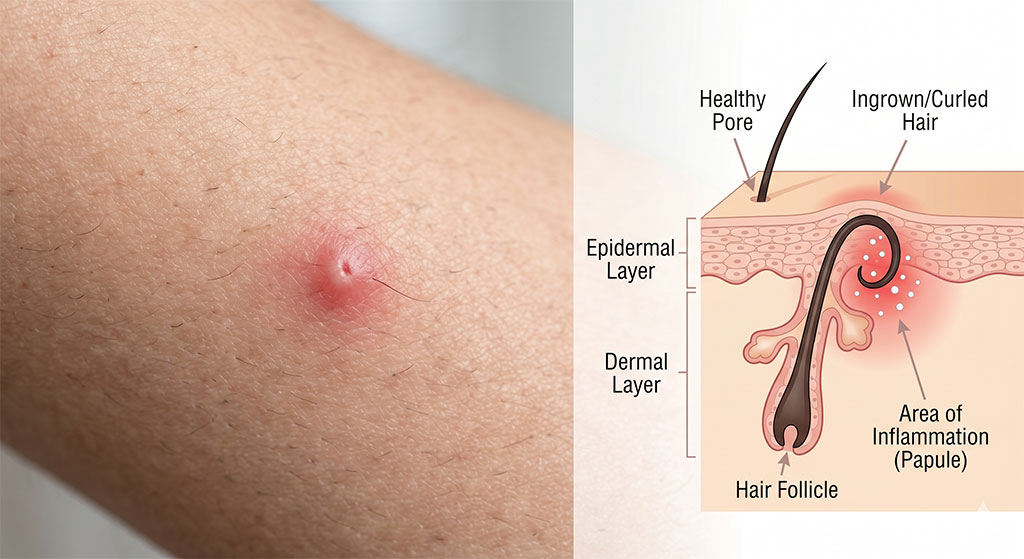
Curled hair trapped beneath the skin surface
Common Culprits Behind Razor Bumps
Several factors contribute to the development of trapped hairs. Identifying which of these mistakes you are making is the first step toward clearer skin. Let’s look at the most common reasons your shaving routine might be failing you.
- Dull Blades: Shaving with an old, blunt razor blade is a massive mistake. A dull blade tugs and pulls at the hair rather than cutting it cleanly. This uneven cut creates a jagged edge on the hair strand, making it much easier for it to pierce the skin as it grows back.
- Shaving Too Closely: Pressing the razor too hard against your skin forces the blade below the surface level. When the hair is cut beneath the skin line, skin cells can easily grow over the follicle before the hair has a chance to emerge, trapping it instantly.
- Clogged Pores: Dead skin cells, excess sebum, and dirt can easily block the opening of a hair follicle. If the pathway is blocked, the growing hair has nowhere to go but sideways or backward into the surrounding tissue.
- Hair Texture: People with naturally coarse or curly hair are significantly more prone to this issue. Because the hair already has a natural curve, it is anatomically more likely to bend backward and pierce the skin wall after being cut short.
Step-by-Step: How to Prevent Ingrown Hairs After Shaving
If you want to stop irritation in its tracks, you must adopt a preventative approach. The actual act of removing hair is only one small part of the equation. The steps you take before and after the blade touches your skin are what truly matter.
This step-by-step framework is designed to protect your skin barrier while ensuring a clean cut. Follow these instructions carefully, and you will drastically reduce your chances of developing razor bumps.
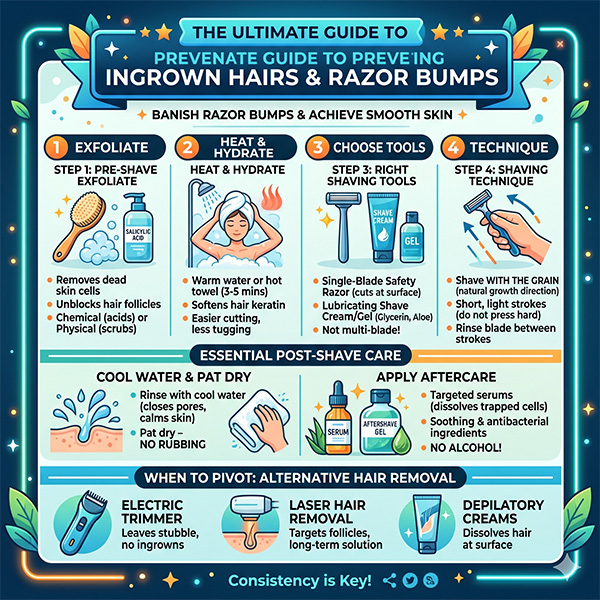
Step 1: The Pre-Shave Exfoliation Strategy
Exfoliation is the single most critical step in your preventative routine. By removing the top layer of dead skin cells, you clear the path for your razor. This prevents the blade from getting clogged and ensures the hair follicles are completely unblocked.
You have two main options for exfoliation: physical and chemical. Physical exfoliants include gentle scrubs, loofahs, or exfoliating brushes. These physically buff away the dead skin. However, you must be gentle to avoid micro-tears in the skin.
Chemical exfoliants are often more effective for sensitive skin. Look for body washes or serums containing gentle acids. A low-concentration salicylic acid wash helps to dissolve the bonds holding dead skin cells together, deeply cleaning inside the pore itself.
Step 2: Heat and Hydration
Never dry-shave or shave with cold water. Cold skin tightens up, shrinking the pores and making the hair follicles stand up rigidly. This creates a highly uneven surface for the razor to glide across, drastically increasing the risk of cuts and tugging.
Instead, expose the area to warm water for at least three to five minutes before starting. You can do this by showering first or by applying a hot, damp towel directly to the skin. The heat and moisture soften the hair keratin, making it significantly easier to cut.
Softer hair requires less force to cut, which means you won’t need to press the razor down as hard. This naturally prevents you from cutting the hair below the skin line, which is a primary cause of irritation.
Step 3: Choosing the Right Shaving Tools
The razor you choose dictates the quality of your shave. Multi-blade razors are heavily marketed, but they are often the worst choice for sensitive skin. They operate on a “lift and cut” mechanism, where the first blade pulls the hair up, and subsequent blades cut it below the surface.
This below-the-surface cutting is exactly what causes hairs to become trapped. To avoid this, switch to single-blade safety razors. A single sharp blade cuts the hair cleanly exactly at the surface level, leaving no jagged edges and no trapped hairs.
Always pair your razor with a high-quality, lubricating shaving cream or gel. Avoid cheap foams propelled by aerosols, as these often contain drying alcohols. Look for formulas rich in glycerin, aloe vera, or shea butter to create a protective slick barrier between the blade and your skin.
Step 4: Mastering the Shaving Technique to Prevent Ingrown Hairs After Shaving
Your technique is just as important as your tools. The golden rule of the perfect shaving technique is to always shave with the grain. This means moving the razor in the exact direction that your hair naturally grows.
Shaving against the grain might feel smoother initially, but it pulls the hair unnaturally and cuts it far too short. This almost guarantees inflammation. Map the direction of your hair growth before you begin, as it can change direction on different parts of your body.
Use short, light strokes. Let the weight of the razor do the work; never press down forcefully into your skin. Furthermore, rinse the blade in warm water after every single stroke to remove trapped hair and cream, ensuring the blade remains sharp and effective.
The Essential Post-Shave Care Routine to Prevent Ingrown Hairs
The moment you put the razor down, your skin is in a highly vulnerable state. You have just scraped away the top layer of your epidermis, leaving your pores completely open. How you treat your skin in the next three minutes is crucial.
Cool Water and Pat Drying
Immediately rinse the shaved area with cool water. While warm water was necessary to open the pores and soften the hair, cool water is now needed to close the pores and calm the skin. The cool temperature reduces immediate inflammation and redness.
When drying off, step away from the harsh towels. Never aggressively rub the shaved area dry, as this intense friction will instantly irritate the freshly shaved skin. Instead, gently pat the area dry with a soft, clean towel, leaving the skin slightly damp.
Applying the Right Aftershave Treatments
Now it is time to apply an ingrown hair treatment or aftershave product. Avoid traditional alcohol-based splashes at all costs. Alcohol severely dehydrates the skin, causing it to overproduce oil, which leads to clogged pores and more bumps.
Instead, look for soothing, antibacterial ingredients. Tea tree oil is excellent for preventing bacterial buildup inside the open follicles. Aloe vera and witch hazel are incredibly effective at bringing down redness and soothing the raw skin barrier.
If you are highly prone to bumps, apply a targeted serum containing salicylic acid or glycolic acid. These beta and alpha-hydroxy acids keep the pores clear of dead skin as the hair begins to grow back over the next few days, acting as a chemical roadblock against trapped hairs.
Top Products to Prevent Ingrown Hairs After Shaving
Finding the right products can be overwhelming. To help you build the perfect anti-bump arsenal, we have categorized the best types of products to include in your updated routine. These swaps will make a massive difference.
Product Category | Why You Need It | Key Ingredients / Features to Look For |
Removes dead skin to unblock follicles pre-shave. | Salicylic Acid (BHA), Lactic Acid, Jojoba Beads. | |
Prevents hair from being cut below the skin line. | Heavy metal handle, single double-edge blade design. | |
Provides maximum lubrication and blade glide. | Glycerin, Shea Butter, Oatmeal extract. No alcohol. | |
Post-Shave Serum | Kills bacteria and prevents pores from clogging later. |
When Shaving Fails: Alternative Methods to Prevent Ingrown Hairs
Sometimes, despite flawless technique and premium products, your skin simply cannot tolerate a razor. If you have incredibly sensitive skin or very coarse, curly hair, shaving may always result in inflammation. When this happens, it is time to pivot.
Electric Trimmers
If a completely bald shave isn’t strictly necessary, switch to an electric body trimmer. Trimmers do not cut the hair flush against the skin. Instead, they leave a microscopic layer of stubble behind. Because the hair never dips below the skin surface, it physically cannot become ingrown.
This method completely eliminates razor bumps while still providing a very neat, well-groomed appearance. Look for trimmers with adjustable guards so you can control the exact length of the remaining hair.
Laser Hair Removal & Depilatory Creams
For a longer-term solution, consider laser hair removal. This treatment targets the melanin in the hair follicle, permanently destroying the follicle’s ability to grow hair. No hair growth means absolutely no trapped hairs. While expensive upfront, it is the ultimate cure.
Depilatory creams are another alternative. These chemical creams dissolve the protein structure of the hair just slightly below the skin surface. Because the hair is dissolved rather than cut with a sharp edge, it grows back with a softer, rounded tip that is less likely to pierce the skin.
FAQ
Most mild cases will resolve on their own within a few days to a week if left completely alone. However, deeper, cystic trapped hairs can last for several weeks. Applying a warm compress daily can help speed up the process by drawing the inflammation to the surface.
Absolutely not. Picking or squeezing the bump forces bacteria deeper into the follicle, transforming a mild annoyance into a painful, full-blown infection. It also drastically increases the likelihood of permanent hyperpigmentation and scarring. Always use chemical exfoliants or sterile tweezers to gently coax the hair out instead.
While baby powder can reduce friction in areas where skin rubs together (like the inner thighs), it is not an effective preventative measure for trapped hairs. In fact, heavy powders can sometimes mix with sweat and sebum, further clogging the freshly opened pores.
You should avoid shaving over actively inflamed skin. Running a sharp blade over raised bumps will slice them open, leading to bleeding, increased infection risk, and scarring. Give your skin a few days to heal, utilize an electric trimmer in the meantime, and treat the area with a warm compress.
Conclusion
Achieving perfectly smooth, irritation-free skin is not a matter of luck; it is a matter of science and consistency. By learning how to prevent ingrown hairs after shaving, you take control of your skin’s health. The secret lies in diligent preparation, utilizing a gentle, single-blade approach, and maintaining strict hydration afterward.
Remember to prioritize exfoliation to keep your follicles clear and always shave with the grain to avoid unnecessary trauma to the hair strand. Ditch the dull multi-blades and alcohol-heavy aftershaves. Instead, invest in high-quality tools and soothing, acid-based serums that actively protect your pores. If you apply these professional techniques consistently, you will permanently banish those painful bumps and enjoy a flawless, comfortable shave every single time.