Dealing with bikini-line irritation is incredibly frustrating. If you are wondering how to treat razor bumps on pubic area, you are not alone. These painful, itchy red spots can ruin your confidence. This guide reveals immediate relief methods, long-term prevention strategies, and top product recommendations.
Getting rid of these stubborn bumps requires a mix of patience, proper skincare, and changing your hair removal habits. The pubic region is highly sensitive, and the hair there is typically coarse and curly. This combination makes it a prime target for severe post-shave breakouts.
By understanding the root cause of the irritation, you can implement a targeted healing routine. We will walk you through the exact steps to clear your skin, prevent scarring, and achieve a flawlessly smooth bikini line all year round.
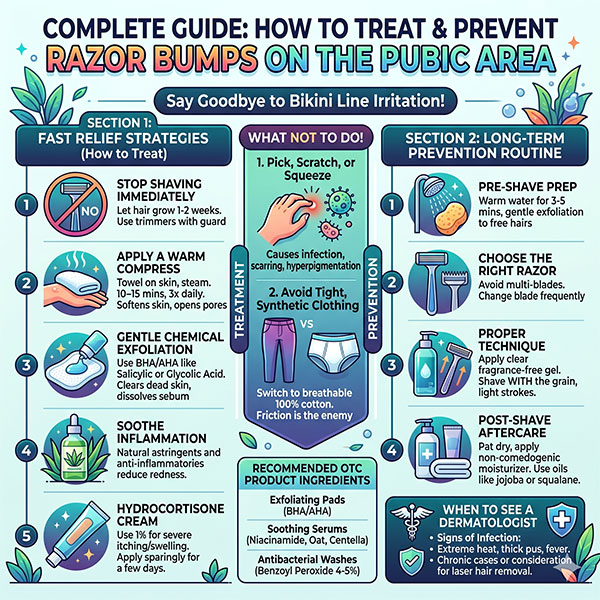
Table of Contents
What Exactly Are Razor Bumps? (Pseudofolliculitis Pubis)
Before you can effectively heal your skin, you must understand what you are actually treating. Medically known as pseudofolliculitis pubis, razor bumps are essentially trapped ingrown hairs.
When you shave, the razor cuts the hair shaft at a sharp angle. Because pubic hair is naturally curly, as the hair begins to grow back, the sharp tip curls downward and pierces the skin barrier.
Your immune system treats this trapped hair as a foreign object. This triggers an inflammatory response, resulting in the raised, red, pimple-like bumps you see on your skin. They can be incredibly itchy, tender to the touch, and take several days or even weeks to fully heal.
Razor Bumps vs. Razor Burn
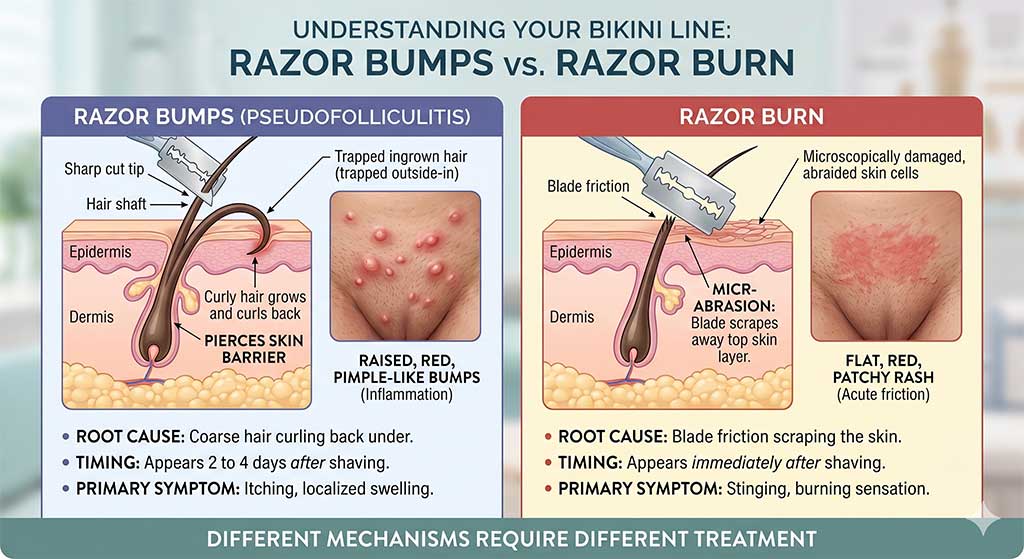
Many people confuse razor bumps with razor burn, but they are two distinct conditions that require different treatments. If you want to know how to treat razor burn on pubic area, your focus must be on soothing acute skin friction.
Razor burn is a micro-abrasion. It happens immediately after you finish shaving because the blade scraped away the top layer of your skin. It presents as a flat, red, stinging rash.
Razor bumps, on the other hand, appear a few days after shaving as the hair attempts to grow back. You can actually have both conditions at the same time, which is why a comprehensive skincare routine is mandatory.
Feature | Razor Bumps (Pseudofolliculitis) | Razor Burn |
Appearance | Raised, red, pimple-like bumps. | Flat, red, patchy rash. |
Timing | Appears 2 to 4 days after shaving. | Appears immediately after shaving. |
Root Cause | Coarse hair curling back under the skin. | Blade friction scraping the top skin layer. |
Primary Symptom | Itching, localized swelling, trapped hair. | Stinging, burning sensation, tenderness. |
Best Treatment | Chemical exfoliation, warm compresses. | Aloe vera, hydrocortisone, cold compresses. |
How to Treat Razor Bumps on Pubic Area (Fast Relief Strategies)
If you are currently suffering from a breakout, your primary goal is to reduce inflammation and help the trapped hairs break through the skin surface. Here is the ultimate step-by-step relief strategy for how to treat razor bumps on pubic area.
1. Stop Shaving Immediately
The absolute most important step in healing your skin is to put down the razor. Continuing to shave over active bumps will slice open the inflamed follicles, leading to severe infection, hyperpigmentation, and permanent scarring.
You must allow the hair to grow out slightly. Give your skin at least one to two weeks to completely heal and reset its barrier. If you must remove hair during this time, use sharp trimmers with a guard to cut the hair just above the skin line.
2. Apply a Warm Compress
A warm compress works wonders for drawing trapped hairs to the surface. The moist heat opens up your pores, softens the skin barrier, and reduces localized swelling.
Soak a clean, soft washcloth in hot (not scalding) water. Press it gently against the affected pubic area for 10 to 15 minutes. You can do this three times a day. As the skin softens, the trapped hair has an easier time breaking through the surface without you having to dig for it.
3. Use Gentle Chemical Exfoliation (BHA/AHA)
Physical scrubs with rough beads can further tear irritated skin. Instead, opt for chemical exfoliants like Salicylic Acid (BHA) or Glycolic Acid (AHA).
Salicylic acid is oil-soluble, meaning it penetrates deep into the pore to dissolve the dead skin cells and sebum that are trapping the hair. Glycolic acid works on the surface to melt away the top layer of dead skin. Gently swipe an exfoliating pad over the bikini line once a day to clear the pathway for the hair.
4. Soothe Inflammation with Natural Remedies
Once you have exfoliated, you need to calm the angry skin. Natural astringents and anti-inflammatories are highly effective for reducing redness and swelling.
- Witch Hazel: An excellent natural astringent that reduces inflammation and cleanses the pores without the harsh burn of rubbing alcohol.
- Aloe Vera Gel: Pure, fragrance-free aloe vera provides an immediate cooling effect and forms a protective moisture barrier over the compromised skin.
- Tea Tree Oil: Known for its natural antibacterial properties, tea tree oil can prevent bumps from becoming infected. Always dilute it with a carrier oil (like jojoba oil) before applying it to the pubic area.
5. Apply Hydrocortisone Cream
For severe itching and swelling, a low-dose over-the-counter hydrocortisone cream (1%) is your best medical defense. Hydrocortisone is a topical steroid that rapidly suppresses the immune system’s inflammatory response.
Apply a thin layer directly to the worst bumps once or twice a day. However, do not use hydrocortisone for more than a few days consecutively, as prolonged use can thin the delicate skin of the pubic region.
What NOT to Do When Treating Pubic Razor Bumps
Knowing what to avoid is just as critical as knowing what to apply. Many common habits actually make the condition significantly worse and lead to long-term skin damage.
Never Pick, Scratch, or Squeeze the Bumps
It is incredibly tempting to pop a razor bump like a pimple. Do not do this. Squeezing forces the inflammation deeper into the tissue, virtually guaranteeing a severe bacterial infection and dark hyperpigmentation spots (post-inflammatory hyperpigmentation) that take months to fade.
Avoid Tight Synthetic Clothing
Friction is the enemy of healing skin. Wearing tight yoga pants, synthetic lace underwear, or restrictive jeans traps sweat and bacteria against the bikini line.
While healing, switch exclusively to loose-fitting, 100% cotton underwear. Cotton is breathable and prevents moisture buildup, allowing the compromised skin to breathe and recover efficiently.
The Best Over-the-Counter Products for Pubic Razor Bumps
Building a targeted skincare arsenal is essential. To successfully treat the pubic area, look for products that balance heavy-duty exfoliation with deep, soothing hydration. Here are the top categories of products you should add to your routine.
Best Exfoliating Pads
Pre-soaked exfoliating pads are incredibly convenient for treating the bikini line. Look for products containing a blend of Salicylic Acid and Glycolic Acid.
These pads allow you to swipe a precise dose of chemical exfoliant over the affected area without making a mess. Use them immediately after showering when your pores are open. Brands like Tend Skin or First Aid Beauty Bump Eraser pads are highly effective industry standards.
Best Soothing Serums
After exfoliating, you must restore moisture. Look for soothing serums formulated specifically for the intimate area.
Ingredients to prioritize include Niacinamide (which fades dark spots left by old bumps), colloidal oatmeal (for anti-itching), and Centella Asiatica (which repairs the skin barrier). A high-quality serum prevents the skin from drying out and overproducing oil, which would otherwise clog the pores again.
Best Antibacterial Washes
Maintaining a clean environment is vital when the skin barrier is broken. Swap your heavily fragranced body wash for a gentle, antibacterial cleanser containing Benzoyl Peroxide.
Benzoyl Peroxide kills the bacteria that cause razor bumps to turn into painful, pus-filled pustules. Use a low concentration (around 4% to 5%) to avoid overdrying the sensitive pubic skin, and ensure you rinse it off completely in the shower.
How to Prevent Razor Bumps in the Pubic Area from Returning
Once you have successfully healed your skin, your strategy must pivot to prevention. Upgrading your hair removal routine is the only way to stop the cycle of irritation permanently.
Pre-Shave Prep Routine
Never shave dry or un-prepped skin. Jump in the shower and let the warm water run over your pubic area for at least three to five minutes. This softens the coarse hair and relaxes the hair follicle.
Next, use a gentle physical scrub or an exfoliating washcloth to buff away the dead skin cells that block the razor’s path. If the hair is long, trim it down with electric clippers first so the razor blade does not have to work as hard.
Choosing the Right Razor
Multi-blade razors are terrible for the bikini line. While a five-blade razor provides a close shave on your legs, it utilizes “hysteresis” — the first blade pulls the hair up, and the subsequent blades cut it below the skin line. This is the exact mechanism that causes ingrown hairs.
Switch to a high-quality single-blade safety razor or a razor specifically designed for sensitive skin with a built-in guard. Furthermore, you must replace the blade frequently. A dull blade tugs and tears the hair instead of cutting it cleanly. Swap your blade out every three to four uses.
Proper Shaving Technique
Your technique matters just as much as your tools. Apply a thick, clear, fragrance-free shaving gel to create a protective glide barrier. Never use bar soap, as it strips the skin of its natural oils and increases blade friction.
Always shave with the grain — meaning in the exact direction the hair naturally grows. Do not stretch the skin tightly, and use short, light strokes. Pressing the blade firmly into the skin is a guaranteed way to cause severe irritation.
Post-Shave Aftercare
As soon as you step out of the shower, gently pat the area dry with a clean towel. Do not rub vigorously. Immediately apply a soothing, non-comedogenic moisturizer to repair the skin barrier.
To lock in moisture and prevent bacteria from entering the freshly shaved follicles, you can apply a lightweight oil like jojoba or squalane. Finally, wear loose cotton clothing for at least the first 12 hours after shaving to minimize friction.
When to See a Dermatologist
While home care is usually sufficient, razor bumps can occasionally escalate into severe medical issues. If the hair follicle becomes deeply infected by staph bacteria, it develops into a painful condition known as folliculitis or a boil.
You should seek professional medical advice if the bumps become extremely hot to the touch, begin oozing thick, foul-smelling pus, or if you develop a fever. Additionally, if you have tried chemical exfoliants and proper shaving techniques for several months with no improvement, a dermatologist can offer stronger solutions.
A doctor may prescribe a topical antibiotic like Clindamycin to clear persistent infections. For chronic sufferers, they will often recommend professional laser hair removal. By destroying the hair follicle entirely, laser hair removal guarantees that you will never deal with razor bumps again.
FAQ
With proper treatment—meaning no shaving, chemical exfoliation, and warm compresses—mild razor bumps usually clear up within one to two weeks. Severe, deeply infected bumps can take up to a month to fully heal and may leave behind dark hyperpigmentation spots that take even longer to fade.
Absolutely not. Popping or digging into a razor bump with tweezers destroys the surrounding tissue. It forces bacteria deeper into the pore, creating a massive infection risk, and almost always results in permanent scarring and dark spots.
While baby powder (talcum or cornstarch-based) can help reduce friction and absorb sweat throughout the day, it does not actually treat the trapped hair. Furthermore, applying powder over broken, inflamed skin can sometimes clog the pores further. Stick to chemical exfoliants and soothing gels for actual treatment.
Conclusion
Conquering bikini line irritation is a process of unlearning bad habits and adopting a gentler approach. Figuring out exactly how to treat razor bumps on pubic area requires dedication to a consistent routine of rest, warm compresses, and smart chemical exfoliation.
Remember, the goal is not just to soothe the current flare-up, but to alter your shaving mechanics so the problem never returns. By switching to a single-blade razor, preparing the skin with warm water, and hydrating deeply post-shave, you protect your skin’s delicate barrier.
Be patient with your skin, invest in high-quality, fragrance-free products, and prioritize a healthy barrier over a perfectly close shave. Follow these dermatologist-backed steps, and you will finally be able to enjoy smooth, clear, and pain-free skin.